
Advanced Mathematical Modeling

The mathematics is why we can move fast.
When you understand the physics from first principles, you don't have to guess your way through the engineering. Many engineering problems become slow because teams can operate the tools but cannot modify the mathematics beneath them. RDT was built around the opposite philosophy. We derive what we need.
Nonlinear estimator inadequate? Derive another one.
Aircraft configuration outside the database? Build the aerodynamic model.
Controller inadequate for the dynamics? Derive the control law.
Optimization problem crosses disciplines? Formulate the coupled problem.
AI architecture exhibits unexplained dynamics? Analyze the underlying state-space system.
Sensor measurements violate the estimator's assumptions? Change the probabilistic model.
Mathematics is not an RDT service sitting beside aerospace, navigation, autonomy, and AI. It is the common language underneath all of them, spanning: numerical modeling, optimization, stochastic processes, numerical methods, nonlinear dynamics, cryptography and quantum mathematics supporting quantum sensing, navigation, communications, information science, cybersecurity and emerging quantum-enabled systems.
Product & Portfolio Exemplars
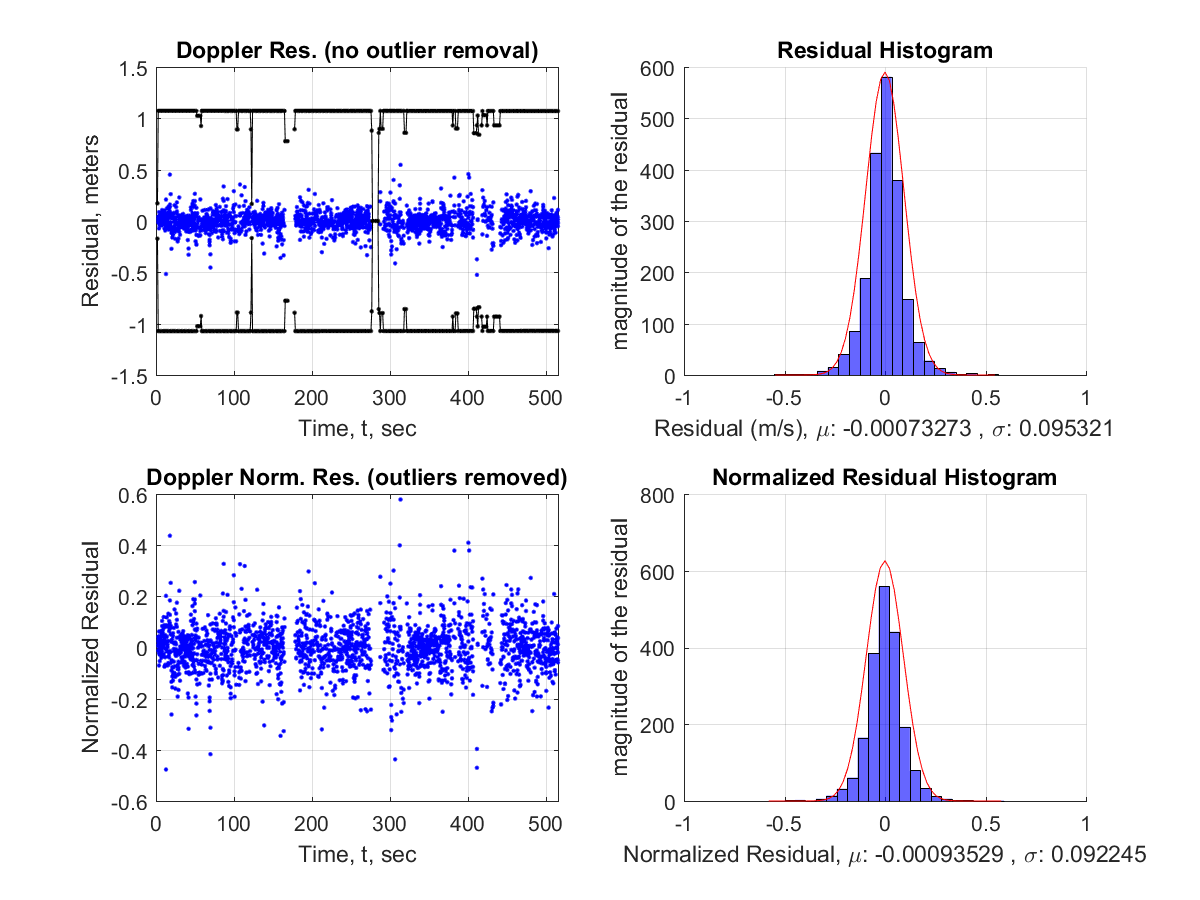
Nonlinear Bayesian estimation
Our navigation work connects a full nonlinear sliding-window formulation with real-time state estimation and measurement-outlier handling. The mathematical development is documented in our research and underpins the RDT ICE-Nav and software toolboxes.
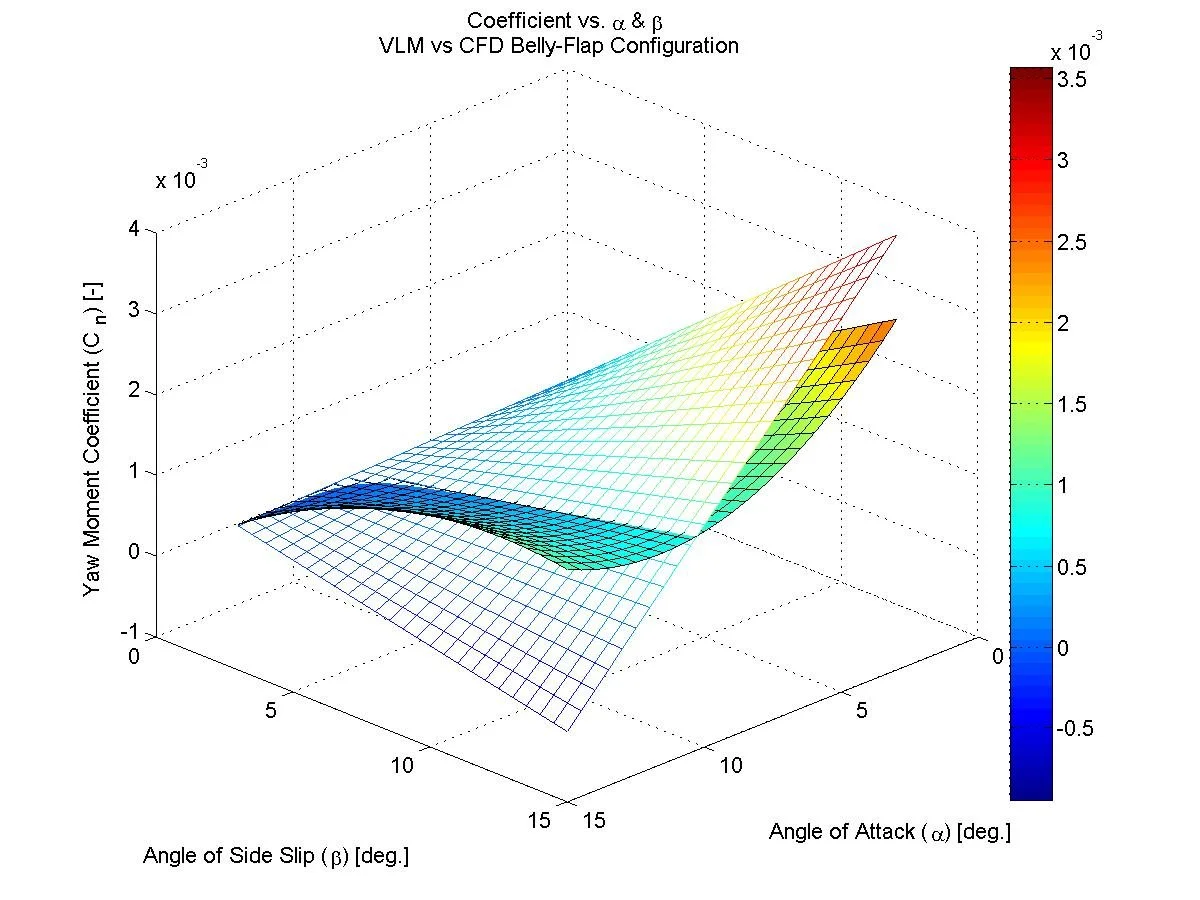
Flight dynamics and control
Our control-development work connects governing equations, aircraft models, control laws, and executable implementations. Simulation and hardware are used to test the consequences of the formulation, not to substitute for understanding it. The mathematical development is documented in our research and underpins the RDT Autopilot and software toolboxes.

Multidisciplinary aircraft optimization
Our founder’s blended-wing-body research used an in-house optimization framework to connect aerodynamic and structural solvers, aircraft-design relationships, and a six-degree-of-freedom simulation database. The mathematics linked design decisions to vehicle behavior.
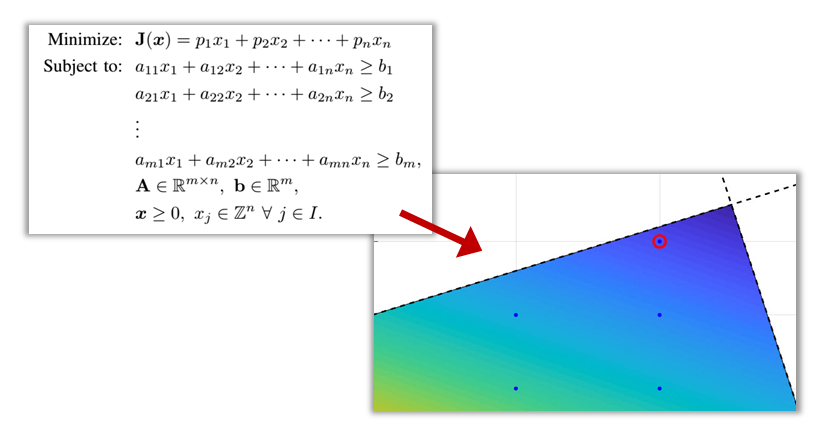
Mathematical analysis & machine learning
Coauthored work on Mamba state-space models applied Lyapunov stability analysis to recurrent model dynamics. It is an example of bringing tools from dynamical systems into an AI engineering problem.
The depth to develop the method, not just run the tool.
RDT's applied-mathematics capability encompasses estimation and inference, optimization, stochastic modeling, numerical methods, nonlinear dynamics, and computational analysis. We also apply first-principles modeling to cryptographic and emerging quantum-technology questions, with attention to mathematical assumptions, computational feasibility, and the evidence needed to distinguish a promising concept from an established result. The deliverable can be a derivation, an algorithm, an executable model, or a complete technical implementation. In every case, the reasoning should remain inspectable.
Technical depth that stays with the program.
When a system crosses disciplinary boundaries, the hardest problems often sit between the models. A navigation assumption changes the controller. A structural constraint changes the aircraft. A numerical approximation changes the result. RDT connects those relationships. We bring the mathematics into the engineering discussion early, and stay with it through implementation and evaluation.