
AI & Secure Mission Systems

AI for Flight-Path Planning & Ground-Station Support
RDT develops AI methods for flight-path planning and ground-station decision support, connecting mission requirements with vehicle dynamics, guidance, and control. Our focus is planning that accounts for how the aircraft responds and what its onboard systems can execute.
This work draws on the same engineering foundation as our aerodynamic analysis, flight simulation, autopilot development, and testing. Candidate methods can be evaluated against vehicle response, operating conditions, and mission requirements before integration.
At the ground station, AI can assist with route evaluation, mission planning, and interpretation of vehicle behavior. Onboard, the engineering task is to connect planning decisions with guidance and control while accounting for the aircraft’s operating limits and available information.
RDT’s experience across aircraft modeling, control, navigation, and AI helps connect these functions throughout development and evaluation.
Secure Communications & Mission-System Cybersecurity
RDT develops secure communications and cyber capabilities for onboard avionics, ground control stations, and mission networks. Our communications technology includes demonstrated error-correction, encryption, and data-recovery capabilities supporting command, control, and telemetry. We connect this work with embedded-system integration, ground-station software, cyber analytics, and AI methods for investigating system behavior. Our approach considers the complete operating system: the vehicle, the communications link, the ground station, the supporting network, and the people responsible for the mission.
Operational deployment experience
RDT builds on decades of national-security engineering experience across the Department of Defense and Intelligence Community, including advanced CyberAI research, operational deployments, and successful research programs with DARPA, IARPA, the Air Force, NSA, and other government organizations. That experience informs how RDT approaches cyber analytics: connect the analytical method to the data pipeline, integrate it into the working environment, and make the output useful to the people responsible for the mission.
We do not treat cyber as an IT problem. We treat it as an adversarial system.
Product & Portfolio Exemplars
RFML — Machine learning brought into operational RF work
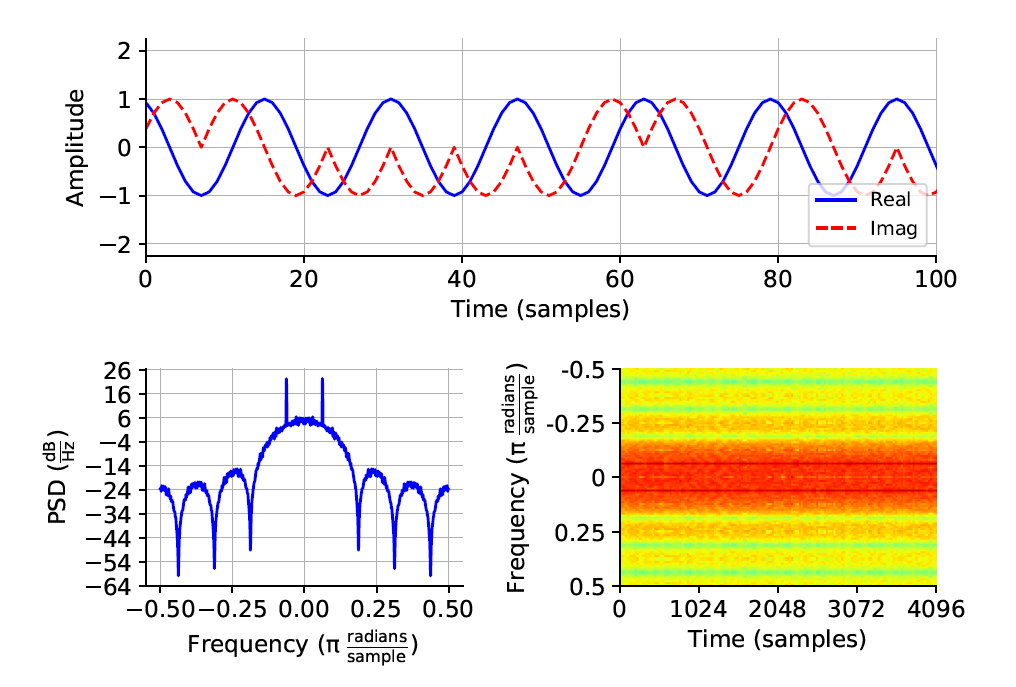
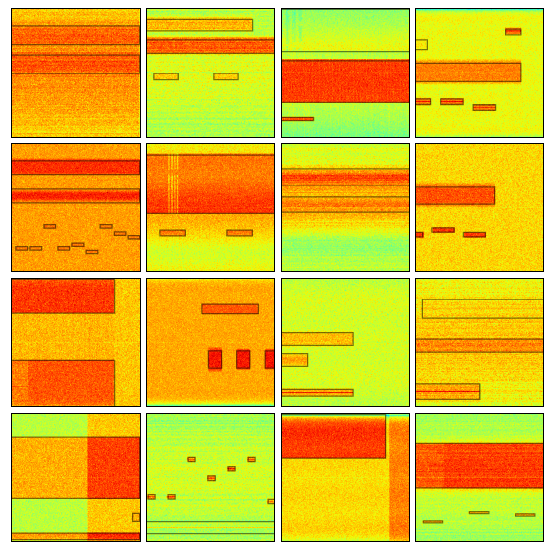
Our prior RFML work is in use on Air Force programs. This is a record of implementation, not simply an interest in applying AI to radio-frequency data. RDT connects that experience with signal processing and mathematical modeling to develop around the actual RF problem. We focus on the measurements available, the behavior the system must distinguish, the operating conditions, and the evidence needed to evaluate its output.
Our value is an analytical capability that addresses the signal and the task.
CyberAI — Operational deployment experience
Our prior CyberAI work is operationally deployed for Air Force Cyber and the Intelligence Community. That experience informs how RDT approaches cyber analytics: connect the analytical method to the data pipeline, integrate it into the working environment, and make the output useful to the people responsible for the mission.
Our technical portfolio also includes network-flow analysis and integer-programming tools. Mathematical structure and operational data belong in the same engineering conversation.
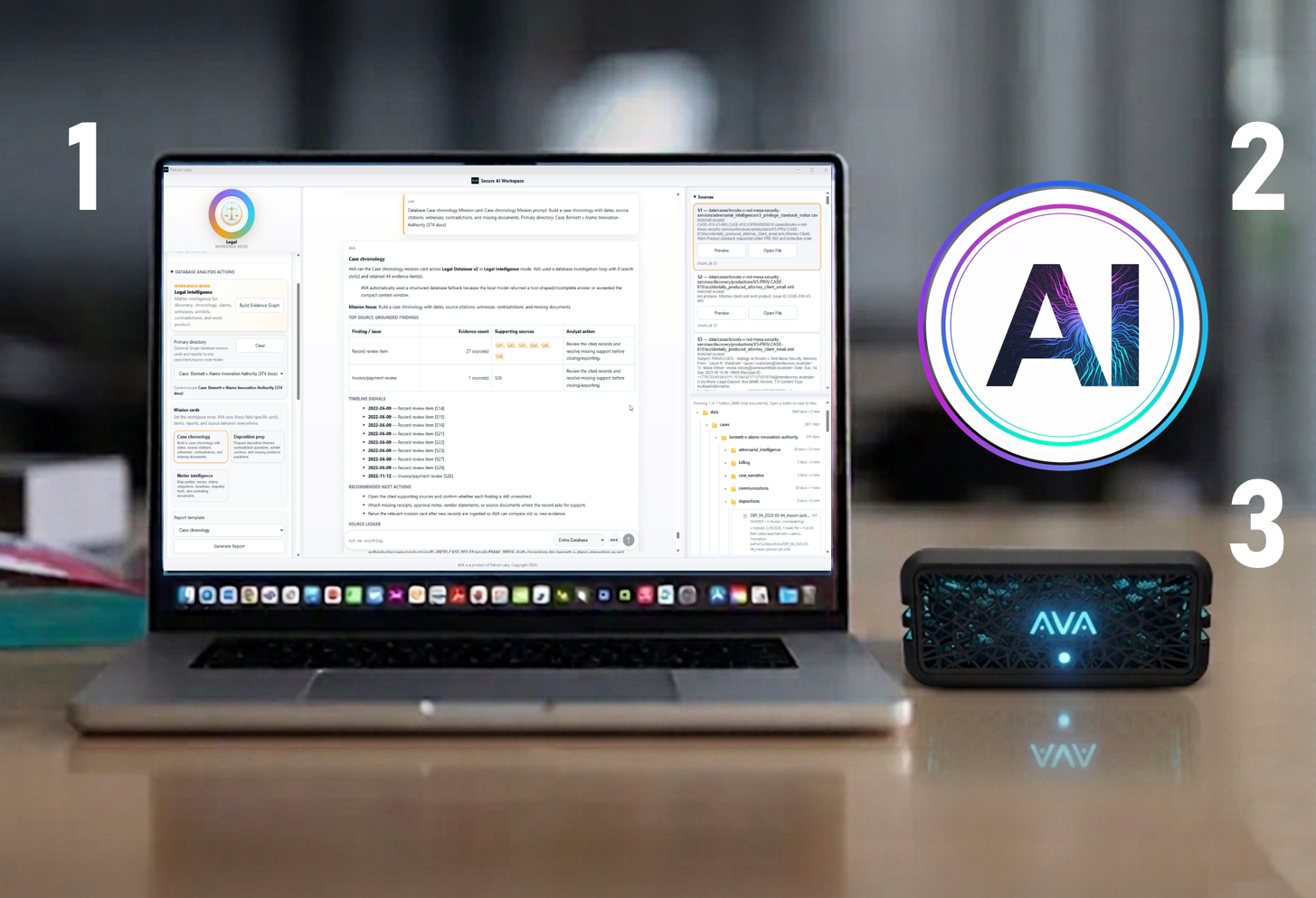
AVA — Private AI you can put to work
Agentic Virtual Assistant (AVA) is the Roysdon Defense private & secure AI platform for high-trust work. It helps teams search records, analyze documents, summarize evidence, prepare reports, compare sources, and automate repeatable knowledge work without sending sensitive workflows into a generic public cloud AI system.
AVA is comprised of three connected components:
AVA-Workspace: The private & secure workspace where users interact with the system.
AVA-AI: The Roysdon Defense-trained, specialized, “Grounded AI” models for text, audio, video, and code.
AVA-Vault: The secure & local hardware platform where everything runs.
Learn More and See demos.
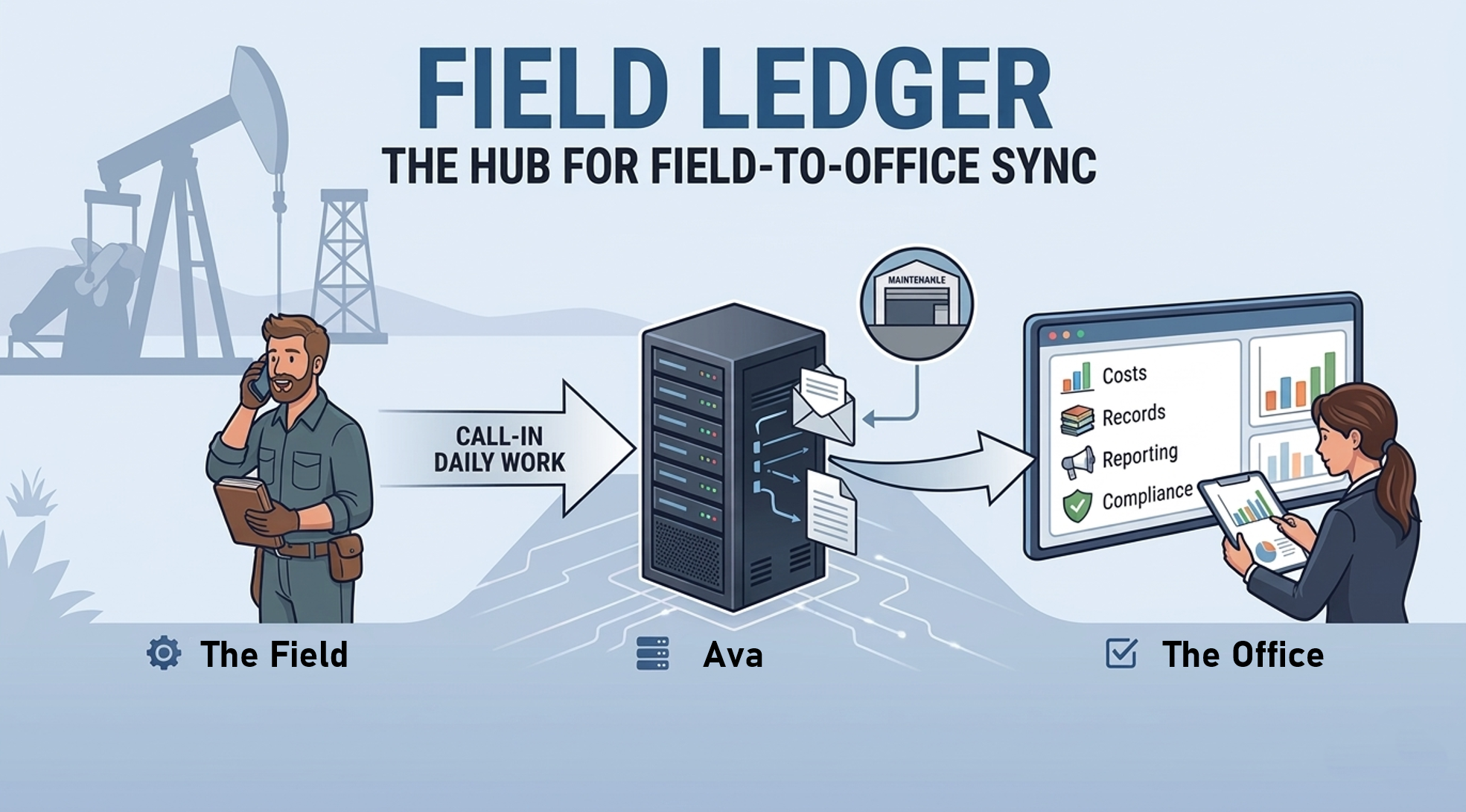
Field Ledger — Turn field activity into usable records
Field Ledger is the Roysdon Defense secure workflow automation system for field records, receipts, reporting, and operational accountability. It brings voicemails, text messages, expense records, and daily activity into one environment so teams can capture what happened, organize supporting evidence, and generate usable reports without relying on fragmented manual processes.
Built to work with AVA, Field Ledger supports privately deployable automation for organizations that need control, reliability, and clear operational visibility.
Research that becomes capability
RDT's cyber foundation is not based on a single research project. It reflects a broader technical history spanning DARPA CASTLE, DARPA DIAL, IARPA End-Gen/GASP, RAMPART, CyberAI, advanced synthetic-data research, reinforcement learning, generative AI, algorithm discovery, RFML, and operational AI systems across the defense and intelligence communities.
DARPA CASTLE, for example, is specifically focused on using reinforcement learning to create autonomous cyber agents and realistic learning environments for advanced persistent-threat defense.
The broader research record matters because today's cyber problems increasingly cross traditional boundaries. A cyber agent may require reinforcement learning. A network model may require graph mathematics. A deceptive environment may require generative AI. A detection problem may require statistical inference. An algorithm may need to be discovered rather than selected from an existing library. And mission systems increasingly intersect with RF, communications, PNT, embedded systems, and autonomous platforms.
That is where RDT's cross-domain engineering depth becomes a cyber advantage.
Train against attacks the model has never seen
One of the most dangerous assumptions in machine-learning-based cybersecurity is that tomorrow's malicious traffic will resemble yesterday's training data. An intelligent adversary has every incentive to make sure that assumption fails.
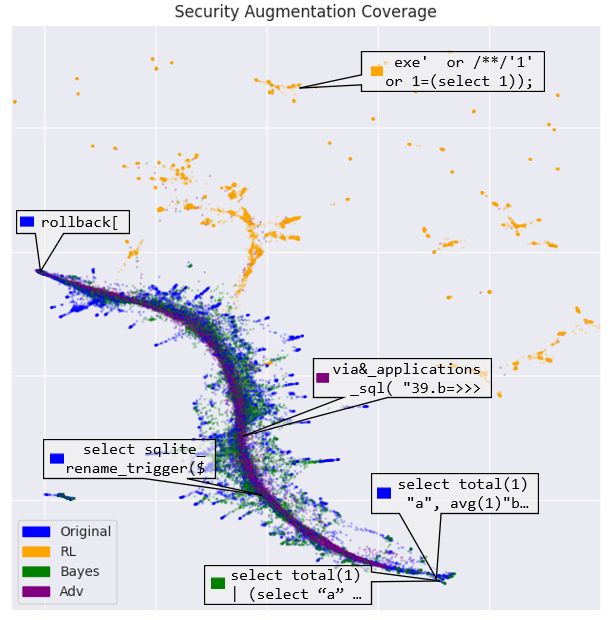
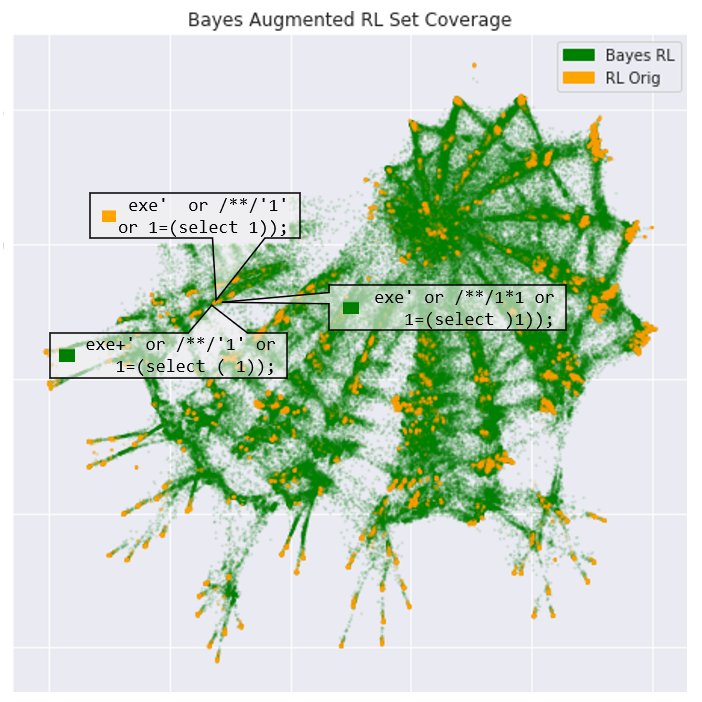
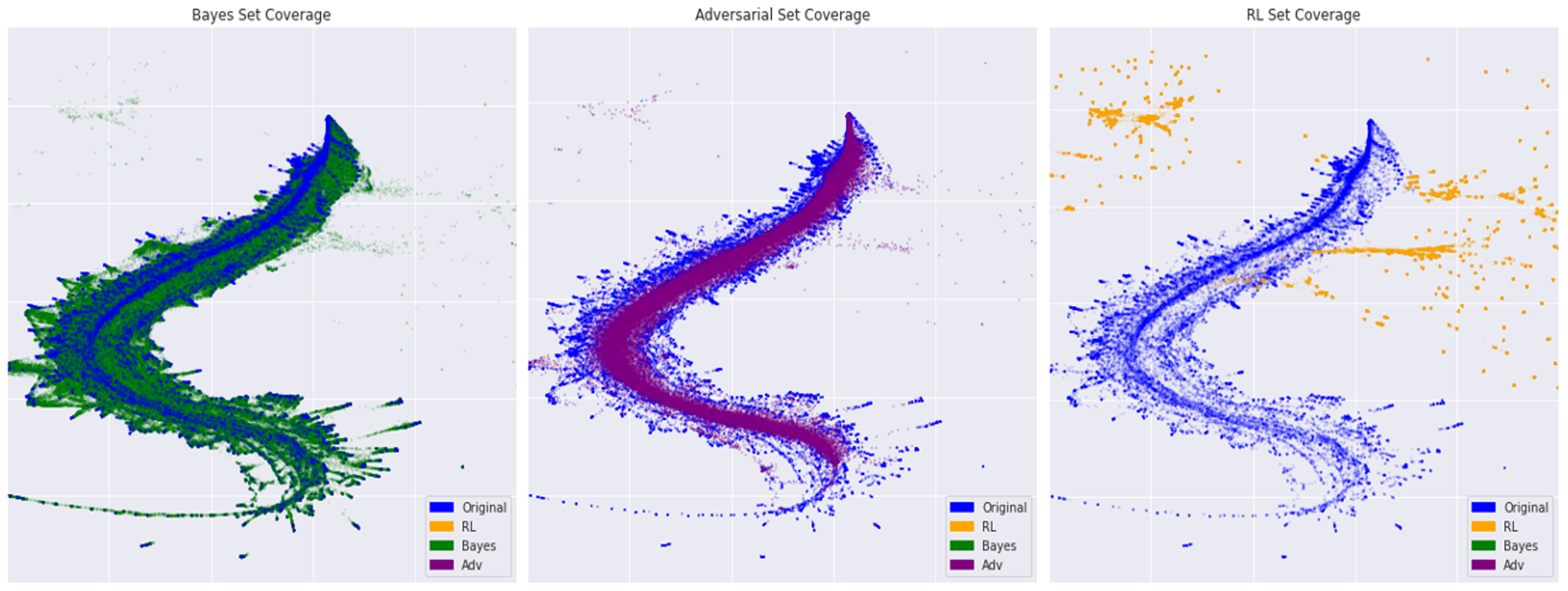
Our founder’s cyber research examined this problem directly by developing security-data augmentation methods based on Bayesian analysis, adversarial generation, and reinforcement learning. The work specifically investigated attack variants that preserve malicious behavior while moving outside the distribution represented by the original training data. That matters because a classifier can perform extremely well against a conventional test set and still fail against an attacker actively searching for an unseen representation of the same attack. The research showed that reinforcement-learning-generated samples could explore areas outside the original training distribution, exposing weaknesses that conventional in-distribution training would miss. Combined augmentation approaches significantly improved downstream defensive classification performance.
The lesson is larger than any single model: Cyber AI must be trained against an intelligent opponent, not merely against historical data.
RDT builds on this research through continued development of methods for generating challenging test data and evaluating cyber defenses against unfamiliar representations of malicious behavior.
Synthetic Cyber Data
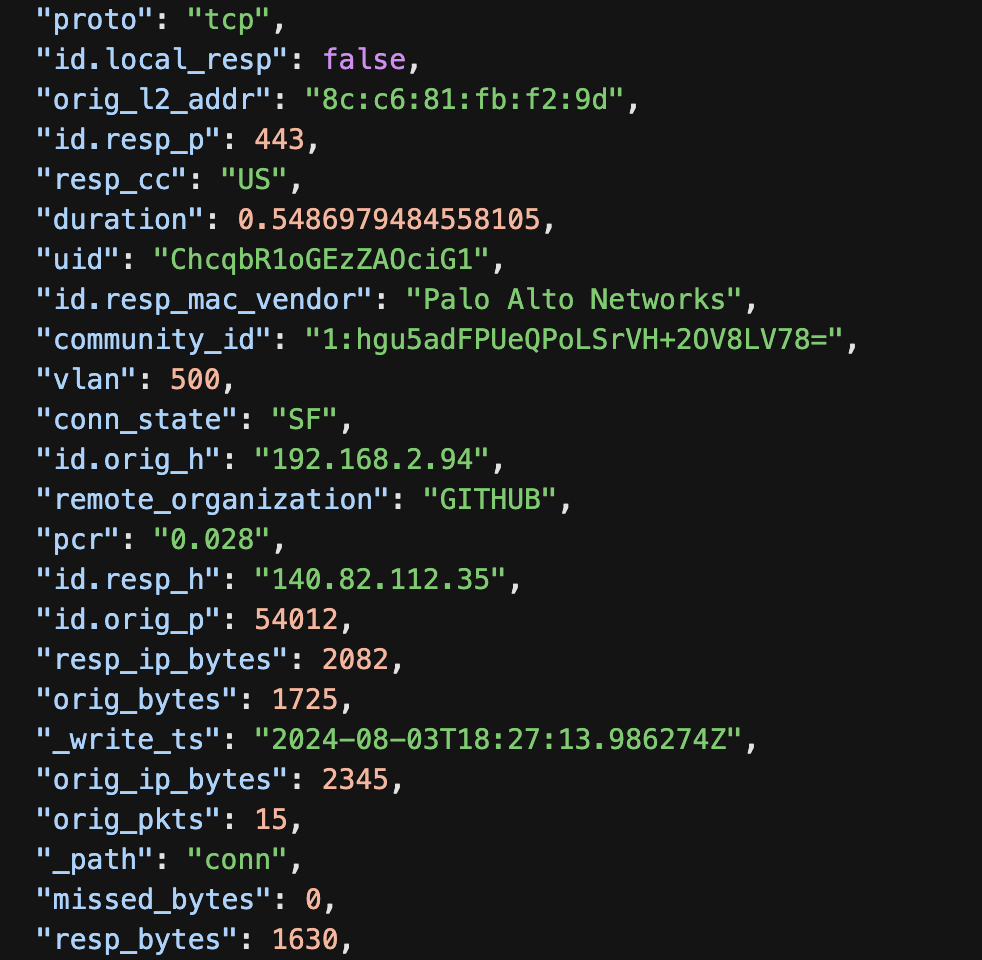
Create the data required to train the defense. Real cyber data presents a difficult engineering problem. Malicious events are comparatively rare. Sensitive network data may be difficult to share. Novel attacks may have little or no historical representation. And the datasets available to researchers frequently fail to capture the complexity of operational networks.
RDT's technical heritage includes the development of TabMT, a masked-transformer architecture for synthetic tabular data generation coauthored by our Founder and published at NeurIPS 2023. TabMT was explicitly evaluated on network-flow data and demonstrated the ability to model extremely large, complex NetFlow datasets. The research scaled from small datasets to more than 30 million NetFlow records while preserving complex relationships among fields.
In cyber applications, that capability can be used to generate realistic network traffic for training, simulation, testing, deception, and algorithm development—without requiring every experiment to depend on sensitive operational data. TabMT subsequently became a core technology in the Advanced Cyber Deception Framework.
RDT extends this foundation through continued work on generative models for cyber-data creation, training, simulation, and evaluation. The objective is to connect advances in machine learning with the data needed to develop and test useful cyber systems.
Cyber deception & active defense
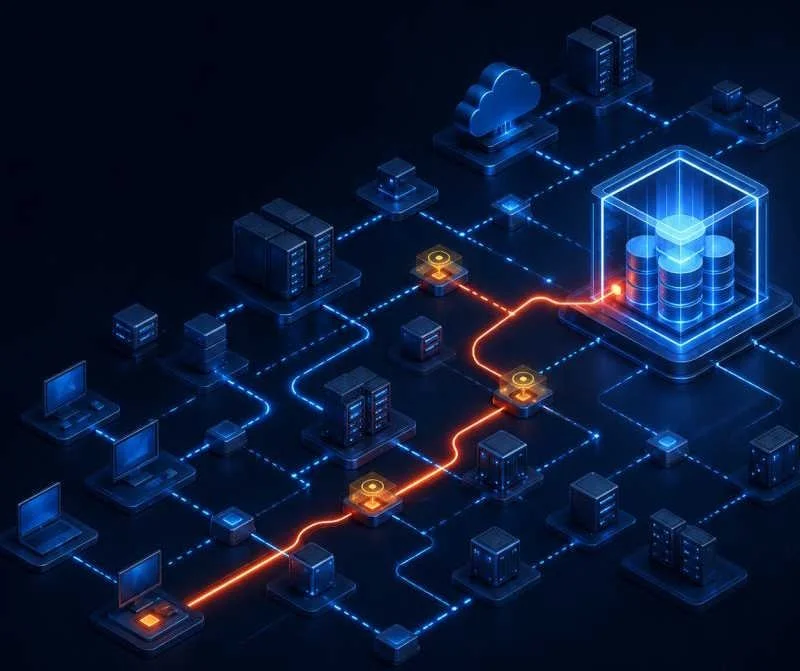
If an adversary enters the network, control what they see. Cyber deception creates an environment in which an attacker cannot easily determine what is real, what is valuable, or whether their actions are being observed.
Our founder coauthored the Advanced Cyber Deception Framework, which combines machine learning, intelligent honeypots, synthetic NetFlow generation, distributed agents, and command-and-control infrastructure to produce realistic deceptive network environments. The research specifically addresses a weakness of conventional honeypots: sophisticated attackers can often recognize artificial environments because their traffic and behavior do not resemble a real network. The resulting architecture generates realistic network behavior and replays it through distributed agents so that deceptive hosts exhibit credible activity rather than sitting passively waiting for an attacker. The research developed two complementary technologies: machine-learning-based traffic generation and network traffic replay, enabling the synthetic environment to evolve as the network changes.
RDT builds on this research to develop adaptive deception environments that help defenders observe adversary behavior, investigate system weaknesses, and evaluate defensive responses.
Develop the AI & Cyber Capability Your Mission Requires
RDT combines original algorithms, operational deployment experience, and hands-on hardware and software engineering to develop AI and cybersecurity capabilities around defined mission requirements.
Our work spans autonomous cyber agents, adversarial machine learning, synthetic data, deception, network analytics, graph reasoning, and mathematical optimization. These methods help investigate system behavior, examine possible attack paths, evaluate defensive responses, and make analytical results useful to the people responsible for operations.
The same engineering approach supports vehicle and ground-station AI, secure communications, RF analysis, and private workflow automation. We can address a focused technical problem, integrate a capability with an existing platform, or develop and demonstrate a defined system.
Contact RDT to discuss autonomous-system AI, communications security, cyber research, or an AVA or Field Ledger deployment.